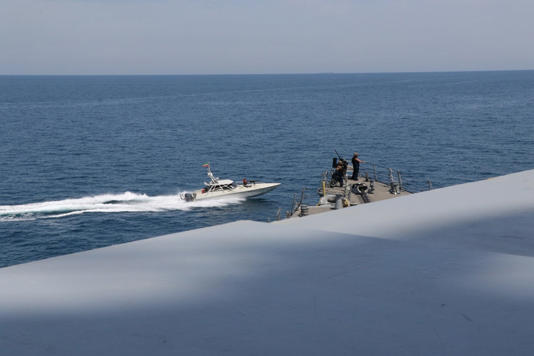
An Iranian crude oil tanker has reportedly entered Indonesian waters despite ongoing maritime restrictions imposed by the United States, underscoring the complexity of global energy flows amid escalating geopolitical tensions.
According to monitoring data cited by Middle East Eye and vessel tracking firm TankerTrackers, the tanker—identified as DERYA—was detected transiting through the Lombok Strait and is currently heading toward the Riau Islands. The vessel is classified as a Very Large Crude Carrier (VLCC), capable of transporting large volumes of crude oil.
The tanker had previously evaded surveillance by the United States Navy and was unable to deliver approximately 1.88 million barrels of crude oil to India due to enforcement actions linked to the ongoing blockade.
“We observed the vessel continuing southward after similar ships in the region were redirected back to Iran by US naval forces. It is currently heading toward a rendezvous point in the Riau Islands,” TankerTrackers stated in a public update.
This incident follows a similar case involving another Iranian tanker, HUGE. According to monitoring agencies, outcomes for Iranian shipments during the blockade have varied—some vessels have successfully reached their destinations, while others have been intercepted, redirected, or seized.
The movement of the DERYA tanker highlights the ongoing contest between enforcement measures and adaptive shipping strategies. Iranian operators appear to be utilizing alternative maritime routes to bypass high-risk zones, including shifting traffic toward Southeast Asian waters.
From a regional perspective, Indonesia’s strategic waterways—particularly the Lombok Strait—are increasingly significant as alternative global shipping lanes, especially when primary routes face disruption. While Indonesia is not directly involved in the conflict, the presence of vessels linked to sanctioned supply chains introduces potential geopolitical sensitivities.
Beyond the immediate incident, the development reflects a broader reality: global energy distribution systems remain resilient but highly vulnerable. Efforts to restrict supply through military or regulatory measures often lead to rerouting rather than complete disruption.
If tensions continue or enforcement intensifies, the impact could extend beyond maritime security to global oil prices, supply stability, and inflation—particularly for energy-importing countries.
As geopolitical pressure persists, the entry of the DERYA tanker into Indonesian waters serves as a reminder that regional seas are not isolated spaces, but part of an increasingly interconnected and contested global energy network.
#KiniMediaJakarta #KiniMedia #KiniMusik




Tinggalkan Balasan