The United States has temporarily suspended its planned maritime escort operation in the Strait of Hormuz—known as “Project Freedom”—as Washington tests the viability of a broader peace agreement with Iran, signaling a fragile shift from military posture toward diplomacy.
According to a report by Axios, US officials had previously sent a private message to Tehran on Sunday (May 3, 2026), informing Iranian authorities that the Pentagon would begin escorting commercial vessels attempting to exit the strategic waterway. The White House also urged Iran not to interfere, aiming to prevent further escalation.
The initiative was formally announced by Donald Trump and launched on Monday (May 4), with support from United States Central Command. The operation reportedly involved guided-missile destroyers, more than 100 aircraft across land and sea, unmanned systems, and approximately 15,000 personnel.
However, just two days into the operation, Trump announced a pause in its implementation.
“Based on requests from Pakistan and other countries, and the significant progress toward a final agreement with Iran, we have agreed that while the blockade will remain fully in place, Project Freedom will be paused temporarily,” Trump wrote on his Truth Social platform Wednesday (May 6).
Rising Tensions, Conflicting Signals
The decision came amid conflicting developments on the ground. Reports indicated that Iran may have engaged a US Navy vessel, although this has not been independently confirmed. At the same time, US Defense Secretary Pete Hegseth stated that Washington continues to communicate with Tehran through both public and backchannel channels to ensure the operation proceeds without interference.
These mixed signals highlight the delicate balance between deterrence and diplomacy currently shaping US-Iran relations.
Iran Expands Control Over Strategic Waterway
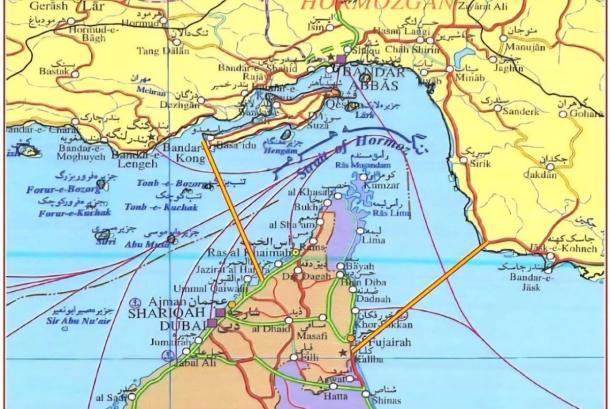
Shortly after the launch of Project Freedom, Iran’s Islamic Revolutionary Guard Corps (IRGC) released a new operational map of the Strait of Hormuz, asserting full control over the corridor.
The revised map defines the strait’s boundaries from Qeshm Island in Iran to Umm Al Quwain in the United Arab Emirates on the western end, and from Mount Mobarak in Iran to Fujairah in the UAE on the eastern side.
Tehran has also introduced a new regulatory system for vessels transiting the strait. Under the framework, ships are required to receive authorization—reportedly via electronic communication—from an entity referred to as the Persian Gulf Strait Authority before being granted passage.
Iranian officials stated that vessels must adhere to designated routes and comply with new transit procedures, a move seen as a direct response to joint US-Israel military actions launched on February 28.
Europe Divided on Military Response
The escalating situation has drawn mixed reactions from European nations. Friedrich Merz signaled Berlin’s readiness to participate in securing maritime navigation, including through military means if necessary.
Germany has reportedly deployed the naval minesweeper FGS Fulda toward the eastern Mediterranean, potentially positioning it for involvement in a broader international maritime security mission in the Strait of Hormuz.
“In the right conditions, Germany is prepared to help ensure freedom of navigation, including through military means,” Merz said following talks with Portuguese Prime Minister Luís Montenegro.
In contrast, José Manuel Albares rejected any military participation, warning that such actions could escalate the conflict further.
“We oppose any military operation that risks escalation. This must be avoided at all costs,” Albares said in an interview with Spanish broadcaster TVE.
He described the current situation as a “dual blockade” imposed by both Iran and the United States, calling it unsustainable and urging a return to diplomatic solutions. Spain, alongside Pakistan, continues to support mediation efforts between the two sides.
Global Stakes Remain High
The Strait of Hormuz remains one of the world’s most critical energy chokepoints, carrying roughly 20 percent of global oil and liquefied natural gas (LNG) supply. Any prolonged disruption poses a direct threat to global energy markets, trade stability, and inflation levels worldwide.
The temporary pause of Project Freedom suggests a narrow diplomatic window may be opening. However, with military assets still deployed and maritime restrictions in place, the situation remains highly volatile.
For now, the world is watching whether this pause marks the beginning of de-escalation—or merely a strategic pause before tensions rise again in one of the most গুরুত্বপূর্ণ waterways in global geopolitics.
#KiniMediaJakarta #KiniMedia #KiniMusik



Tinggalkan Balasan