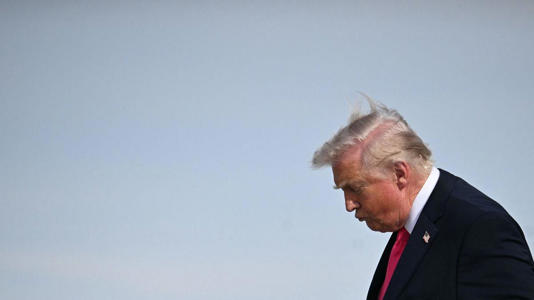
WASHINGTON/BERLIN — Tensions between the United States and Germany have escalated after U.S. President Donald Trump sharply criticized German Chancellor Friedrich Merz over his remarks on recent U.S.–Israel military actions against Iran.
The dispute reflects growing divisions among Western allies regarding the handling of the Middle East conflict, particularly the balance between military action and diplomatic engagement.
President Trump defended the strikes as a necessary step to prevent Iran from advancing its nuclear program. In contrast, Merz questioned both the strategic effectiveness and long-term consequences of such actions, highlighting concerns increasingly voiced across Europe.
In a social media post, Trump responded directly to the German leader’s criticism.
“Chancellor Friedrich Merz thinks it’s acceptable for Iran to have nuclear weapons. He doesn’t know what he’s talking about. If Iran obtains nuclear weapons, the entire world becomes a hostage,” Trump wrote.
Beyond the immediate dispute, Trump also criticized Germany’s domestic situation, suggesting that the country’s economic challenges were linked to what he described as weak leadership.
Diverging Views on Strategy
Merz’s remarks signal a notable shift in tone from Germany, traditionally one of the United States’ closest allies. While Berlin has historically supported Israel and maintained strong transatlantic ties, the chancellor’s recent statements suggest a more cautious approach toward military escalation.
He argued that the U.S. risks being “outmaneuvered” by Iran diplomatically, pointing to Tehran’s refusal to engage in talks under pressure, including ongoing maritime blockades.
“The problem with conflicts like this is not only how to enter them, but how to exit them,” Merz said, drawing parallels to prolonged U.S. engagements in Afghanistan and Iraq.
His comments highlight a broader European concern: that military intervention without a clear exit strategy could lead to prolonged instability rather than resolution.
Impact on Alliances and Global Stability
The public disagreement underscores widening cracks within NATO and the broader Western alliance. European nations have largely refrained from direct military involvement in the conflict with Iran, a stance that has frustrated Washington.
Trump has repeatedly criticized European allies for what he perceives as insufficient support, even threatening economic measures against countries opposing U.S. policy. During a recent White House meeting, he reportedly warned of trade consequences for nations unwilling to align with U.S. actions.
Despite these tensions, Trump previously described Germany as a “respected country” and praised his relationship with its leadership—remarks that now contrast sharply with the current rhetoric.
Contradictions and Strategic Uncertainty
Adding complexity to the situation, U.S. intelligence assessments have at times contradicted the administration’s narrative. Director of National Intelligence Tulsi Gabbard reportedly stated before Congress that Iran was not actively developing nuclear weapons, raising questions about the justification for military escalation.
Meanwhile, Trump has repeatedly claimed that earlier U.S. strikes had “destroyed” Iran’s nuclear capabilities—an assertion that remains contested.
Broader Implications
The dispute between Washington and Berlin extends beyond personal rhetoric. It reflects deeper strategic disagreements over how to manage Iran, stabilize the Middle East, and balance military force with diplomacy.
At a time when global energy markets are already under pressure and geopolitical risks are rising, fractures among Western allies could weaken coordinated responses to international crises.
As tensions continue, the key question is whether these differences will remain rhetorical—or evolve into a more fundamental realignment of transatlantic relations.
Writer: Faisal Kusuma
#KiniMediaJakarta #KiniMedia #KiniNews #GlobalPolitics #USGermany #IranConflict #Geopolitics





Tinggalkan Balasan