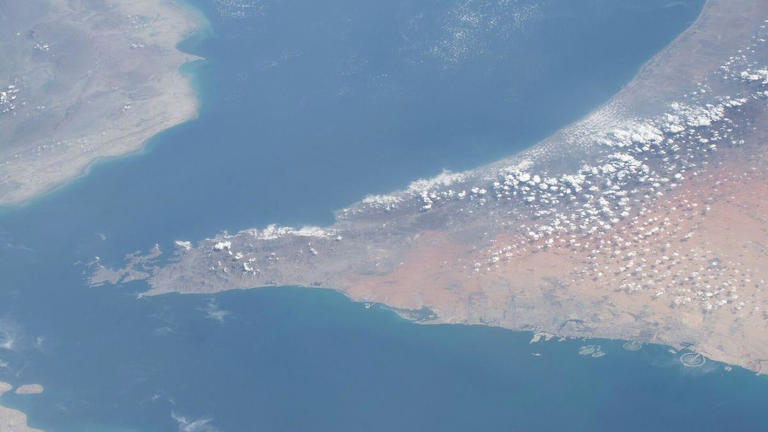
The United States is set to launch a strategic maritime operation aimed at assisting vessels stranded in the Strait of Hormuz, one of the world’s most critical energy transit routes. The initiative, scheduled to begin on Monday (May 4, 2026), comes amid ongoing tensions between Washington and Tehran that have severely disrupted global shipping flows.
President Donald Trump announced the plan without detailing its technical execution, but emphasized its urgency in addressing the growing humanitarian and economic risks in the region. The operation is expected to support hundreds of vessels and an estimated 20,000 seafarers currently trapped in the Gulf due to heightened security threats.
“We have informed these countries that we will guide their ships safely out of these restricted waters, so they can freely resume their business operations,” Trump said in a statement posted on social media Sunday (May 3). He also introduced the initiative as “Project Freedom,” signaling a coordinated effort to restore limited navigation in the contested waterway.
The announcement came shortly after Iran confirmed it had received and was reviewing the latest US response to a proposed de-escalation framework. Iranian officials stressed that the discussions are not مرتبط with nuclear negotiations, indicating that any immediate agreement would focus on ending hostilities and lifting maritime blockades rather than addressing long-term nuclear concerns.
Despite a fragile ceasefire that has held for approximately three weeks, the situation in the Strait of Hormuz remains highly volatile. Since the conflict escalated on February 28, the corridor has seen a near-total halt in commercial traffic. Maritime tracking data and satellite imagery indicate that only minimal vessel movement has occurred in recent days, with many ships opting to anchor in safer waters while awaiting clarity.
The disruption has left oil, gas, and cargo vessels stranded, exposing crews to mounting logistical challenges and security risks. Reports from maritime authorities suggest deteriorating onboard conditions, including limited supplies and prolonged uncertainty.
Diplomatic engagement between the US and Iran continues indirectly. Iranian state media reported that Washington’s response to a 14-point proposal was delivered via Pakistan, though no official confirmation has been issued by US or Pakistani authorities. Tehran has reiterated that nuclear negotiations remain off the table for now, prioritizing a resolution to the ongoing conflict and maritime restrictions.
“At this stage, we are not engaged in nuclear negotiations,” said Iranian Foreign Ministry spokesperson Esmaeil Baghaei, underscoring the country’s position.
Trump, meanwhile, signaled cautious optimism, suggesting that ongoing discussions could lead to “very positive outcomes for all parties.” However, he did not rule out the possibility of renewed military action if tensions escalate further.
Security risks in the region remain acute. A recent incident involving a cargo vessel reportedly attacked by small boats near the Iranian coast highlights the persistent dangers. According to the United Kingdom Maritime Trade Operations (UKMTO), the attack occurred near Sirik, east of the strait, though all crew members were reported safe. The incident is among at least two dozen recorded attacks since the conflict began.
Iran has denied involvement in such attacks, stating that vessels are occasionally stopped for inspection as part of routine monitoring. However, Tehran maintains that it exerts control over the strait and has suggested that non-aligned vessels may pass under certain conditions, including the payment of transit fees—an assertion that has raised concerns over potential violations of international maritime law.
The near paralysis of the Strait of Hormuz carries significant global implications. Approximately 20 percent of the world’s oil and gas supply transits through the corridor, making any disruption a direct threat to energy markets and economic stability.
For energy-importing countries such as Indonesia, prolonged disruption could translate into rising fuel prices, increased logistics costs, and broader inflationary pressures. While the US escort operation may provide short-term relief by facilitating limited vessel movement, analysts warn that structural risks will remain unless a comprehensive diplomatic resolution is achieved.
As tensions persist, the international community is closely monitoring whether this intervention will help stabilize one of the world’s most strategic waterways—or further intensify an already fragile geopolitical landscape.




Tinggalkan Balasan