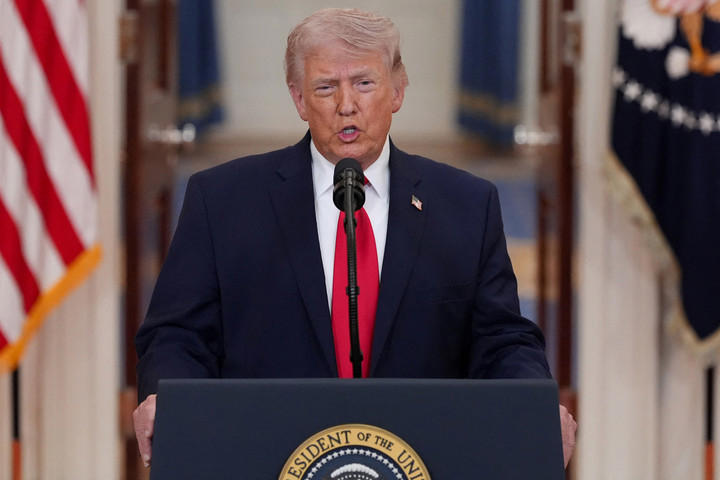
WASHINGTON — U.S. President Donald Trump has approved more than $8.6 billion in military arms sales to key Middle Eastern allies, bypassing congressional review procedures by invoking emergency authority.
The decision, announced by the U.S. Department of State on Friday and reported by Reuters on Sunday (May 3), comes as the conflict involving the United States, Israel, and Iran enters its ninth week, with a fragile ceasefire still holding after more than three weeks.
U.S. Secretary of State Marco Rubio justified the move by declaring an emergency situation that requires immediate military support to allied nations, effectively bypassing the standard congressional oversight process.
Under the approved package, Qatar will receive Patriot air defense system support and replenishment services valued at $4.01 billion, along with Advanced Precision Kill Weapon Systems (APKWS) worth $992.4 million. Kuwait is set to acquire integrated combat command systems valued at $2.5 billion, while Israel will receive APKWS systems worth $992.4 million. The United Arab Emirates will also receive APKWS systems valued at $147.6 million.
The Patriot system—developed by RTX in collaboration with Lockheed Martin—is designed to intercept incoming missile threats, while APKWS provides precision-guided strike capabilities. Additional contractors involved in the deal include BAE Systems and Northrop Grumman.
The arms sales follow joint U.S.–Israel military strikes on Iran on February 28, which prompted retaliatory attacks by Tehran targeting Israel and Gulf states hosting U.S. military bases. The broader conflict has since expanded, including spillover into Lebanon, resulting in thousands of casualties and the displacement of millions.
The decision to expedite the arms deal underscores Washington’s strategic objective to reinforce regional defense capabilities and maintain deterrence against Iran. However, it also raises concerns over transparency and democratic oversight, as bypassing Congress limits scrutiny over the scale and implications of such agreements.
The move is also likely to reignite debate over U.S. defense ties with countries such as Kuwait, Qatar, and the United Arab Emirates. For years, human rights organizations have criticized these partnerships, citing alleged restrictions on civil liberties, including the treatment of minority groups, journalists, opposition figures, and migrant workers.
In the context of an already volatile geopolitical landscape, the timing of the arms sales is particularly significant. While the additional military support may strengthen allied defenses, it also carries the risk of escalating tensions in a region where stability remains fragile.
As diplomatic efforts continue alongside military posturing, the long-term impact of this decision will depend on whether it contributes to deterrence and stability—or further intensifies conflict dynamics across the Middle East.
Writer: Faisal Kusuma
#KiniMediaJakarta #KiniMedia #KiniMusik #GlobalPolitics #MiddleEast #USForeignPolicy #Defense #Geopolitics




Tinggalkan Balasan