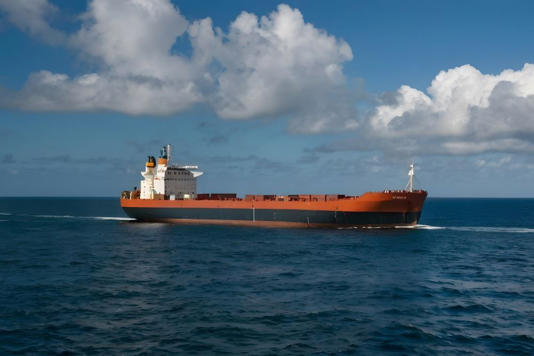
BEIJING — The government of China has urged all parties to safeguard maritime navigation in the Strait of Hormuz after the critical shipping route was reportedly closed following escalating tensions between Iran and the United States on Saturday (February 28, 2026).
According to a report by Bloomberg, China—currently the world’s largest importer of oil and natural gas—relies heavily on the strategic waterway. Nearly half of China’s crude oil imports passed through the Strait of Hormuz as of the end of last year.
Chinese Foreign Ministry spokesperson Mao Ning stated that Beijing is urging all sides to exercise restraint to prevent further escalation.
“China calls on all parties to immediately halt military operations, avoid escalating tensions, and ensure the safety of navigation in the Strait of Hormuz,” Mao said on Wednesday (February 4).
Rising tensions in the Middle East have drawn global concern, as the strait remains one of the most strategically important corridors for the global energy trade.
Bloomberg also reported that four commercial vessels carrying liquefied natural gas bound for China were reportedly damaged amid the ongoing conflict.
The situation has prompted several Chinese energy companies to recommend that the government avoid policies that could disrupt LNG supplies, particularly from Qatar, one of China’s key suppliers.
Qatar accounts for roughly 30 percent of China’s LNG imports, supporting industries that rely on both pipeline gas and methane produced from biomass.
Meanwhile, forces from the Islamic Revolutionary Guard Corps (IRGC) were reportedly deployed to block the Strait of Hormuz in response to escalating regional tensions.
The closure of the route has triggered significant concern over global energy market stability.
Energy analysts at Barclays warn that global oil prices could surge sharply if the conflict intensifies. Brent crude prices are projected to exceed US$100 per barrel under a prolonged escalation scenario.
For comparison, Brent crude spot prices were still trading around US$73 per barrel on Friday (February 27).
“The oil trading market may face its greatest fear when markets reopen,” a Barclays analyst told Reuters.
If the conflict continues to escalate, the consequences could extend far beyond the Middle East, potentially shaking global economic stability—particularly for countries heavily dependent on energy imports.
Author: Faisal / FKY
#KiniMediaJakarta #KiniMedia #KiniMusik #MiddleEast #Iran #UnitedStates #China #StraitOfHormuz #OilPrices #GlobalEnergy





Tinggalkan Balasan